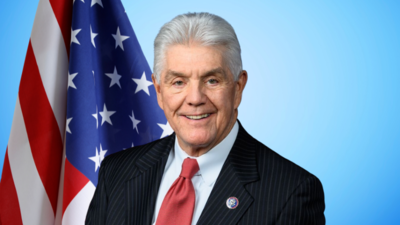
Health, Employment, Labor, and Pensions Subcommittee Chairman Rick Allen (R-GA) led a hearing today focused on whether union leaders are adequately representing their members rather than pursuing separate agendas. The hearing, titled "Ensuring Union Leaders Represent Members, Not Agendas," examined the effectiveness of the Labor-Management Reporting and Disclosure Act (LMRDA).
In his opening statement, Allen highlighted the LMRDA's original purpose. "Today’s hearing will examine the ways in which we can strengthen the Labor-Management Reporting and Disclosure Act (LMRDA) to better support union members who want to participate in governing their unions. All workers in a unionized workplace, whether they voted for or against the union, are represented by it for the purposes of collective bargaining, contract administration, and pursuing grievances. Because of this broad authority, many workers choose to stay involved in union affairs and maintain their membership."
Allen emphasized Congress' intent behind passing the LMRDA. "Congress passed the LMRDA to ensure unions operate fairly and democratically. Recognizing that unions, like any organization, can be vulnerable to mismanagement or corruption, Title One of the LMRDA protects key rights of union members. These include the right to elect their leaders, participate in union meetings, speak freely, access their collective bargaining agreements, and seek justice in court if internal procedures fail them. In short, if a union goes rogue or engages in corrupt or anti-democratic actions, the LMRDA is supposed to empower members to hold their unions accountable."
However, Allen argued that current protections are not always effective for workers: "Unfortunately, the LMRDA is falling short. Too often union members are left without a real voice in decisions that directly impact their work and livelihoods. We will hear testimony about unions not allowing members to vote on collective bargaining agreements or strike authorizations, despite the enormous stakes of both. We will also hear about how difficult it can be for union members to even get a copy of their union contract or their union’s internal rules and procedures." He pointed out challenges such as limited member participation in important votes and difficulties accessing key documents.
The subcommittee also discussed concerns over political activities by unions: "We will also discuss the political activity of unions. They make generous financial contributions to various political causes and candidates. They support get-out-the-vote efforts all over the country. They endorse political candidates. But these unions do not ask their members if they support any of these activities. Members are not polled before endorsements are made or funds are spent."
To address these issues, committee members have introduced legislation aimed at improving accountability among union leadership: "That is why Members of this Committee have introduced legislation aimed at making union leadership more accountable to the workers they represent. These bills reflect the original intent of the LMRDA—to keep unions honest, democratic, transparent, and responsive to their members."
Allen concluded with an appeal for bipartisan agreement on strengthening worker participation within unions: "We may not all agree on the broader role of unions in society. But today I hope we can agree on this: workers deserve a real say in the organizations that speak and act on their behalf. Strengthening the LMRDA is a step toward respecting the choices of American workers and making sure unions truly work for workers."